
The Last Human Thing
On film, feeling, and what stories do that nothing else can

Somewhere in Austin, Texas, the lights went down.
A short film began to come to life in pixels flickering across a festival screen. The screens that make every frame feel larger than life, and every breath in the room feels borrowed. The film was called Final Frame. It had taken three years and twenty thousand dollars and a kind of stubborn love to make. It was about two people trying to hold a relationship together while life tried to pry it apart. They happened to be gay. But the film, its makers insisted, was not really about that. It was about love pressed against the limits of ambition. It was about the friction between who we are and who we’re trying to become.
In the audience, a burly stoic looking man sat quietly. Broad shoulders. A Texan visage. Not the kind of person you might immediately imagine being undone by a short film.
By the final scene, he was crying.
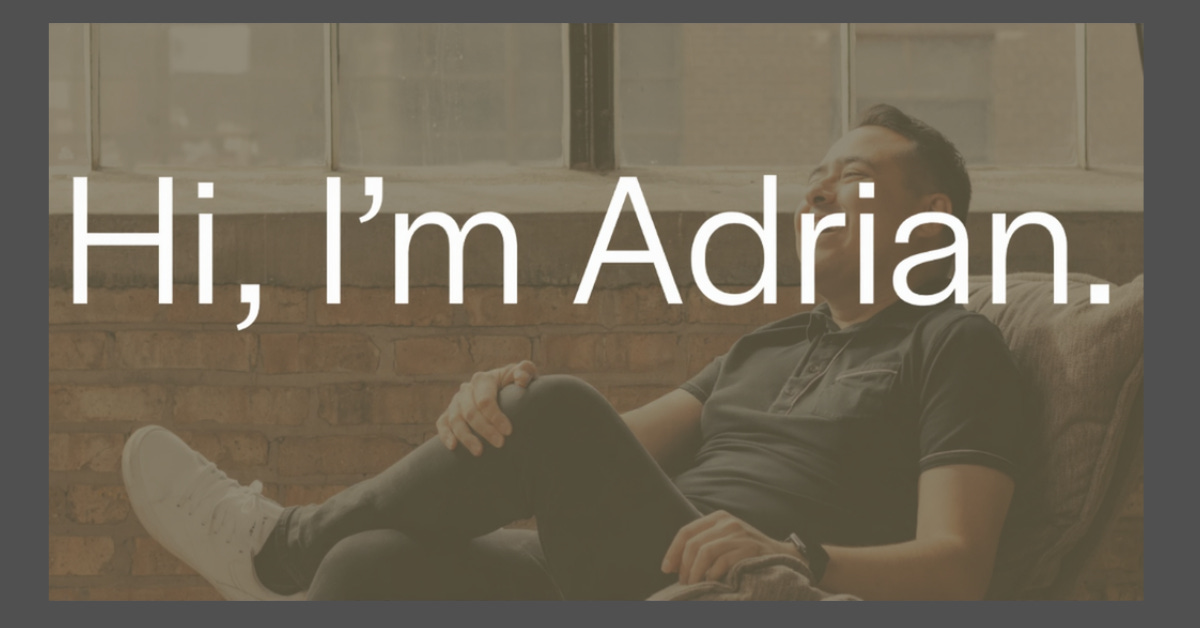
And the filmmaker — Adrian Nuno, co-founder of Luminoso Studios, twin brother, Chicago native, a man who has spent the better part of sixteen years trying to make people feel something — was not watching the screen. He was watching the audience. He already knew every cut of his film. He had lived inside this film for years. What he needed to see, what he was hungry for, was the moment it crossed over. The moment it stopped being something he made and became something that happened to someone else.
That moment, he told me, is why he does all of it. All of this.
I’ve been thinking a lot lately about what stories actually do. Where they reside when they arrive.
Because it is not always about what we say they do. Stories are never contained, not by the cultural talking points about representation or empathy or the power of narrative. These compositions, these creatures, they actually accomplish something, mechanically, in the body, in the split second before we’ve had time to think about what we’re feeling.
There is a scene in E.T. the Extraterrestrial where a boy on a bicycle rises off the ground to save his friend. That’s all. A boy. A bicycle. Gravity, suddenly, releasing its grip. Steven Spielberg built that moment over the course of an entire film — slowly, quietly, patiently — and then he let it happen, and something in us lifts along with it.
Adrian saw that film at a drive-in theater in McHenry, Illinois. He was a child. He came away with a question he has never quite stopped asking: how do people make that? How do you engineer the feeling of rising? How do you take light and shadow and sound and editing rhythm and human faces and make someone feel, for just a moment, that the world is not quite as heavy as they thought?
He went home and picked up his father’s camcorder.
There is a theory still unspoken but widely practiced. It is that art is what we do with what we cannot say.
When a teenage boy in their Crystal Lake community died by suicide, the result of relentless online cruelty, Adrian and his twin brother Andrew didn’t know what to do with the weight of it. They were angry. They were grieving. And they did what they had always done when the world became too much to hold in words alone: they made something.
Andrew wrote a slam poem. Adrian filmed it. All Too Soon was the result — a meditation on the lives cut short when people are told, over and over, that they are not enough. They screened it at their community college. They screened it at a National Alliance on Mental Illness meeting.
At that screening, something happened that Adrian did not expect.
A person who had not spoken at any prior meeting apparently, who had sat through session after session in silence, carrying whatever they carried, suddenly opened up for the first time. Because he had seen something on screen that gave the language. Or maybe not even language. Permission. The film had reached into somewhere that words alone could not and held up a mirror and said: you are not the only one who feels this way.
That is what art does. That is the specific, irreplaceable, almost chemical thing it does. It crosses the gap between one interior world and another in a way that nothing else can. It crosses a chasm, fuses a membrane. There is often no data. Certainly no policy. Nor a well-reasoned argument to accompany. A story reaches across the distance between people and makes contact.
When it works, it touches something that was waiting all along to be touched.
Adrian grew up Roman Catholic. Altar server. Confirmed. He sat in confession booths as a teenager and said Hail Marys for thoughts he couldn’t help having — thoughts about who he was, who he loved, what his life might look like if he were allowed to want what he wanted.
He came out to his twin brother first. They were in their late teens. Neither of them was alone after that.
His mother, when he told her, pulled him close and said the words he didn’t know he needed: God made you who you are, and God doesn’t make any mistakes.
His father took a little longer. Adrian knew he would. He extended patience anyway, never as an act of self-erasure, but always as an act of love. He understood that his father was navigating new territory, that the man’s entire frame of reference was being asked to shift, and that the expansion takes time.
It did take time. And then his father went to his first Pride parade.
Adrian tells this story as someone who believes in the power of story. He believes, in a way that his films reflect, that people are capable of more than their first response. That the arc of a relationship — like the arc of a good story — is rarely decided in its opening scenes.
Give them love. Give them patience. You’d be surprised what time can do.
In a recent conversation, something Adrian said about joy stuck with me. Maybe it matters more than it might seem.
He’d been wrestling with a question that a lot of us are wrestling with right now, whether we name it or not: do I have permission to feel joy? With everything collapsing, everything contested, everything raw — is it okay to feel something light?
He found his answer in a piece of history from the AIDS crisis. Activists who would bury their friends in the morning, march and protest in the afternoon, and dance all night. Not because the dancing negated the grief. Not because the joy was a retreat from the fight. But because you cannot sustain the work of caring for others if you have emptied yourself completely. Joy is not an indulgence. It is a resource. It is what you go back to the well for.
Adrian, by his own admission, has spent most of his life in motion. Always building, always producing, always going. He and his twin, Andrew, eventually gave themselves permission to stop — not forever, but long enough to breathe. Long enough to feel what had accumulated. Long enough to let inspiration find them instead of chasing it down.
Final Frame was born in that space. The rest was not wasted time. It was the soil for new growth.
We are living, right now, in a moment that is making it harder to feel anything at all.
The pace of information is relentless. The political climate is heavy and fractious and exhausting. And then there is all the artificial intelligence — the technology of enormous and still-unfolding consequence — that has introduced into every creative space the question of what is real, who made it, and whether it was made by anyone who actually felt something while making it.
Adrian watched a friend — an illustrator — see her artistic style reproduced by a text prompt in seconds. Work that had taken years of practice, of failure, of refinement, of love — reduced to an input-output equation. She didn’t say anything. She didn’t need to. The loss was visible on her face.
He is not naive about where this is heading. He knows the investment is massive, the momentum is real, and that none of it is going away. But his response to that knowledge is not surrender. It is a sharpening of intention. A commitment, more fierce now than before, to make work that carries something AI cannot manufacture: the specific texture of a human life, honestly examined.
I’ve started referring to this as a reverse Renaissance. We are moving toward a moment when the most valuable mark on any piece of creative work will not be technical perfection, but rather proof of human origin. The smudge. The imperfection. The typo left in on page 46 of a self-published book because it is, in its own way, a signature. A human wrote this. Here is the evidence.
Craft has always mattered. But now it is also a form of testimony.
What I carry away from my conversation with Adrian is not any single story, though there are many worth carrying.
It is something more like a conviction, or a reminder of one I already had but needed to hear again, reverbed back to me.
We are, all of us, made of the stories that have moved us. The film seen at a drive-in as a child. The poem that gave someone in a NAMI meeting the courage to finally speak. The short film that made a cowboy in Austin cry, not because it told him something new, but because it told him something true.
Art does not solve problems. It does not fix what is broken or calm what is inflamed or slow what is accelerating. But it does something that nothing else does: it reminds us that we are here. For a reason. That we are inside these bodies, with these hearts, in this particular, passing, irreplaceable moment. It makes us feel the weight of that, like a privilege.
Adrian Nuno has spent sixteen years trying to give people that feeling. Trying to recreate, for someone in an audience he may never meet, what he felt the night the lights came up on a drive-in screen in Illinois and a boy on a bicycle rose into the sky.
That is the work. That is the fight. And it matters now more than it ever has.
Adrian Nuno is the co-founder of Luminoso Studios and the co-host of the Twin Spin podcast. You can find his work on the Nuno Twins YouTube channel, his personal channel under his name, and on Instagram at adrianthenunotwin.
This essay is sculpted from the words captured in Episode 162 of the Coffee and Change podcast. Listen wherever you get your podcasts.
This is a beautiful account of humanity, the power of story, love and emotion. I love this line: "The short film that made a cowboy in Austin cry, not because it told him something new, but because it told him something true."