
The Hidden Track That Found a Boy
Relearning the chords of anticipatory grief 30 years later

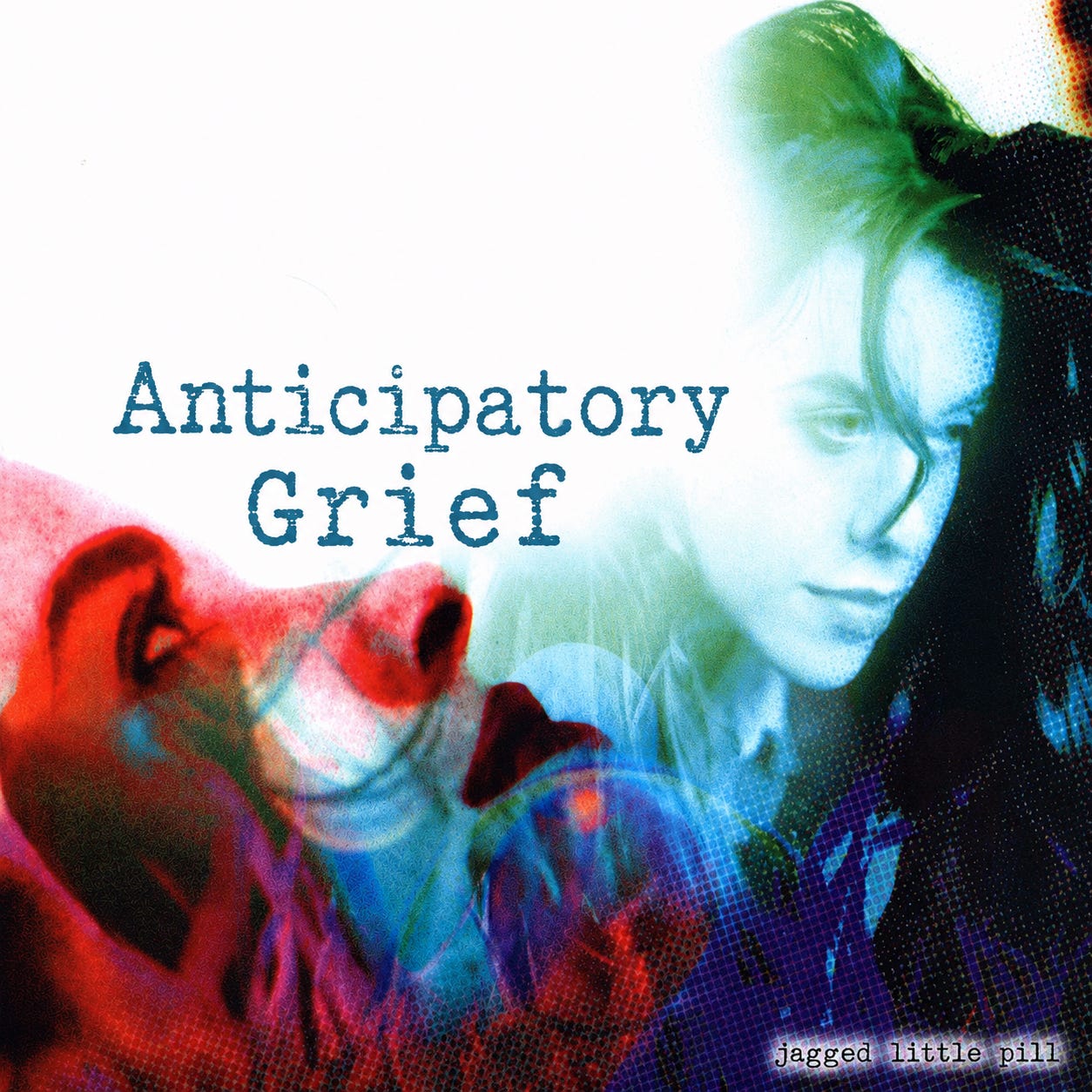
Anticipatory grief. As a teenager, I learned to dance with it. It would arrive before the first play of a new album. She would pull up a seat, invisible and just sit with me as I hit “PLAY” on the CD player. She had a right to be there I guess, perhaps to help me before the album actually ended. She would place her harmonic hand on my shoulder somewhere in the final song, as a low hum of mourning arose to count in what was about to close.
In 1996, I was seventeen, living in Moscow, Russia, the eldest son of a family shaped by the architectures and admonishments of the Catholic Church. My world had walls. I lived behind the Berlin Wall. Music was where the walls came down, and where a young man’s soul moved most freely.
I had obtained a copy of Alanis Morissette’s Jagged Little Pill surreptitiously, quietly, rebelliously. Teenagers in Moscow in the 90s obtained things this way in a sort of transaction that required discretion. Contraband is perhaps too strong a word. But the Church had opinions, and publications that warned parents of letting this art be experienced by youth. I understood without being told (I was quite good at that skill by then) that this album was not something to be heard in common spaces.
So I listened to it alone. Door closed. The CD player on my bedside table, the liner notes unfolded across the childhood desk.
It warrants honoring, talking about the experience of listening to an album all the way through with liner notes in your hands, because I’m not sure we fully appreciate what we’ve lost. You were inside something. Time became ambient. And slowed. The lyrics were artwork on glossy paper and the sound coming through the speakers created a kind of capsule. It was sealed, private (almost), and total. You were inside the chrysalis for an hour, or a lifetime, it didn’t matter. And you always emerged on the other side of a first play of an album, having rearranged something in you.
Alanis rearranged something. The lyrics of Jagged Little Pill pierced the chambers of the confessional in a way no priest ever had. The venial sins I had quietly collected now had a soundtrack. A boy not yet a man began tracing the smaller, more tender sins, carving the puzzle pieces, anticipating who I was becoming and what I was beginning to understand about myself. The wisdom of a lyric no textbook could touch.
I was practically shaking by the time the last song listed in the liner notes arrived. Wake Up. I told myself: Bill, wake up. The room felt different. I felt different. I stayed very still. Anticipatory grief had placed her hand on my shoulder and I had not been prepared to let go.
The CD kept spinning after the last track ended.
I assumed system malfunction. I got up to hit “Eject”, and then a voice came through the speakers and I froze.
I went to your house. Walked up the stairs. Opened your door without ringing the bell...
I stood there, half-risen from my chair, completely unable to move. There was no song listed. The liner notes in my hand had told me everything there was to know up until then, and they had lied by omission. A tactic I would come to know all too well later in life. This voice was softer, more naked than anything on the album, no band, no production, solely breath and confession. And it was singing in the space where silence was supposed to be. What was happening?
I had just discovered my first hidden track.
Discovering a hidden track in 1996 was a bridge crossing toward innocence. There was a space of silence and a toll crossing. You could not know. You had to have already grieved, already begun to let go of the artist’s glance into your being, before you could walk plank by plank toward what was beyond. It lived in the interval between the album’s declared ending and silence, and it could only arrive as a kind of mistake, a letting go, a letting it play through and not rushing to hit “Eject” or replay from the top. It introduced many of us to grace and the power of what belongs unannounced, uncatalogued, impossible to seek.
So forgive me love, if I cry in your shower. So forgive me love, for the salt in your bed. So forgive me love, if I cry all afternoon.
I stood there in my room in Moscow and I did not move for a long time. Tears stained. If anyone had walked up those stairs to discover my venial songstress, any punishment would have been worth it.
Now, some thirty years later, in a much wiser play through of this album, I get to name things with a clarity that only distance and time grant me the power to do.
That first play through and uncovering of a hidden track on an Alanis Morissette album was languishing out of order. I was standing in the presence of a future hidden self without knowing what I was encountering.
I was a boy hiding his wholeness. Not from others, but heartbreakingly from himself. The hiding was so complete and encased I didn’t know it was hiding. I thought it was just the shape of things.
I would not come out until I was thirty. 30 years on this planet to understand the power of love comes with the possibility of losing it all. It would cost something real and promise something even more real. Love. Integrity. Insight.
The decision to stop performing the life we’ve been assigned and begin living the one that we were put here for is a bit like discovering a hidden track on an album. You have to give it space, time and grace. And then listen. Deeply. It is not lost on me that this album is 30 years old coming back to me as I reflect on my own pass at 30 then, better understood through the liner notes of life.
In that room then, at seventeen, I was not yet capable of that language. I had the power of song however, to hold me. And the one that wasn’t listed, playing in the in-between, arriving after I thought it was over, it still haunts me.
One never forgets their first hidden track.
That grief I felt at the end of albums wasn’t so much about the music ending, it was about knowing I wouldn’t be the same boy or man this side of the play. Life is a series of small rehearsals for the larger losses and the larger arrivals. And the long overdue encores. Even the ones that arrive 30 years later.
I was good then, in that room. And standing here thirty years later, I am finally forgiving the boy who didn’t know it yet. So that I would be good…again.